Nov 19, 2012 to Nov 22, 2012


2007 Beresan Winery Cabernet Sauvignon Walla Walla Valley – $16.99


My comments

This was one of the Garagiste Mystery wines.  In this case, this was the anonymous Walla Walla Cabernet Sauvignon that was offered for $16.99 in March of this year.  I wasn’t familiar with the winery which left me even more intrigued.  This was delivered last month, so it’s time to open one.


Winery history

Located in the world-renowned Walla WallaValley appellation, Beresan has 27 acres of estate vineyards that we carefully manage to produce premium fruit, and in turn, great wine.  The geologic distinctiveness of our vineyards, combined with fine winemaking, is reflected in the unique character of our exclusive, limited production wines.


Owned and operated by the Waliser family, our mission at Beresan Winery is not only to make outstanding wine and satisfied wine consumers, but to live a dream of having a fun, successful and enduring experience with friends and family at our winery.


We invite you to enjoy our wines and come see us at our winery in the beautiful Walla WallaValley.


For more information, visit http://beresanwines.com/


My Tasting Note

The wine is a fairly dark garnet color.  The very pleasant nose has cassis, cedar, minerals, dried herbs, Asian spices, violets, some earthiness, and a touch of dark chocolate.  This has medium to full body with fairly solid, ripe tannins and very nice acidity.  The fruit is a bit brighter on the palate than the nose lead me to expect, leaning more towards the cherry and raspberry spectrum.  Besides the nice fruit on the palate, the spices, minerals, and dried herbs provide considerable depth.  The finish has decent length and highlights the spicy oak, dried herbs, and dark chocolate with the fruit in the background.  The bright acidity and nice tannins tell me this can comfortably stay in the cellar for several years, but it’s very tasty today.  A bit more length and complexity would be nice, but for under $20, this is a keeper.  (90 pts)


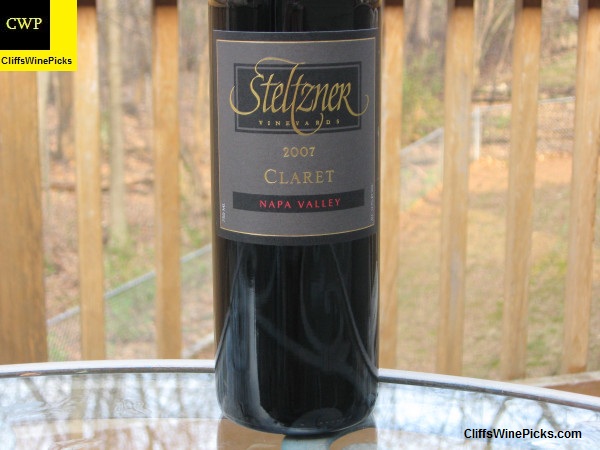
2007 Steltzner Vineyards Claret – $13.29


My comments

A long time favorite in the week night Bordeaux style blend category.  The blend changes every year, in this vintage it is 68% Cabernet Sauvignon, 20% Merlot, and 12% Cabernet Franc.


Winery history

Richard Steltzner established his first Stags Leap District Vineyards in 1965 while concurrently engaging in vineyards management.  Steltzner Vineyards’ first commercial release was in 1977, and the Steltzner Family established their own modest facility in 1983, with a 3,000 case capacity here in the Stags Leap District.


Today at Steltzner Vineyards you will find Dick’s children working with him to carry on his legacy here in the NapaValley.  Allison Steltzner began working with her father full-time in 2002 after completing her Bachelor of Sciences Degree at ChicoState, majoring in business administration, with a minor in marketing.  Allison is uniquely suited for her post as General Manager and National Sales Director for Steltzner Vineyards.  Today, she is joined by Justin, as the second generation Steltzner family to work full time in the winery.  Justin carries on his father’s farming traditions and works side by side with Dick to manage the ranch and produce optimal fruit from our estate.  Their sister Laura makes her home in Casablanca, Morocco with her husband working in the cosmetics business.


For more information, please visit http://www.steltzner.com/


My Tasting Note

The wine is a fairly dark ruby color.  The nice nose features blackberries, cedar, dried herbs, cherries, vanilla, and some smoke.  This has medium body, fairly solid tannins and good acidity.  The wine is a touch lean on the palate with the spicy oak and dried herbs providing most of the flavor with the berries in the background.  The finish has nice length with the fruit coming back into the picture.  The wine has a bit too much oak for the fruit to conceal.  This probably needs to be consumed over the next year before the fruit fades leaving just the oak elements.  (86 pts)


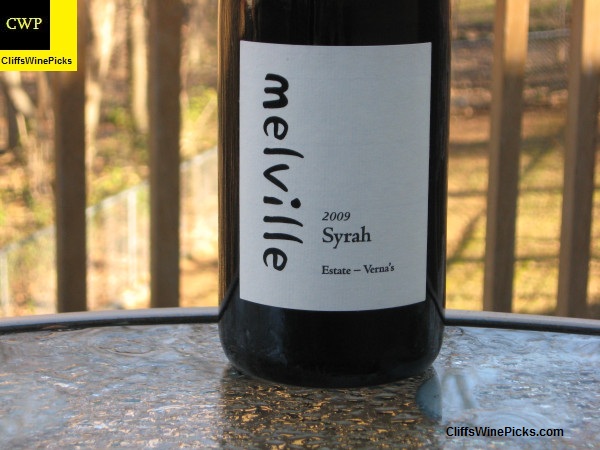
2009 Melville Syrah Estate Verna’s – $19.37


My comments

I’m a big fan of Melville’s Pinot Noirs, but when I saw this at the local store, I had to grab a couple bottles.  I had a bottle not long after purchase and it left me a bit underwhelmed.  I decided to give it a year in the cellar to see how it would come around.  It’s now been about a year and a half, so it’s time to check in.


Winery history

In 1989, Melville Vineyards, a family owned and operated enterprise was founded in SonomaCounty’s KnightsValley, where Ron Melville grew high quality, much sought after Chardonnay, Merlot, and Cabernet Sauvignon.  In 1996, Ron’s desire to grow Pinot Noir and Chardonnay brought Melville Vineyards to Lompoc’s Sta.RitaHills, located in the western Santa Ynez Valley of Santa Barbara County, California.  The Sta.RitaHills appellation is where Ron Melville and his sons Brent and Chad Melville decided to develop their estate vineyards and winery.  Since then, they have also developed an interest in Rhone varietals, particularly Northern Rhone Syrah and Viognier.  The Melville estate achieves quality through the integrity of its farming practice and its respect to the microclimate.


Additional information available at http://www.melvillevineyards.com/index2.html


My Tasting Note

The wine is a bright ruby red color.  The very nice nose features black raspberries, cherries, Asian spices, smoke, white pepper, spicy oak, and a touch of earthiness.  This has a medium body with fairly solid tannins and good acidity.  The palate has nice spicy red and black fruit with a bit of oak and some earthiness.  The finish has decent length but does show a touch of excess oak and a bit of stems.  With some air the excess oak and stems integrate and the wine adds a bit of weight.  The fruit also becomes a bit more prominent especially on the backend and finish.  I’d advise to decant for an hour or two or even better let it sleep for another year or two.  (91 pts)


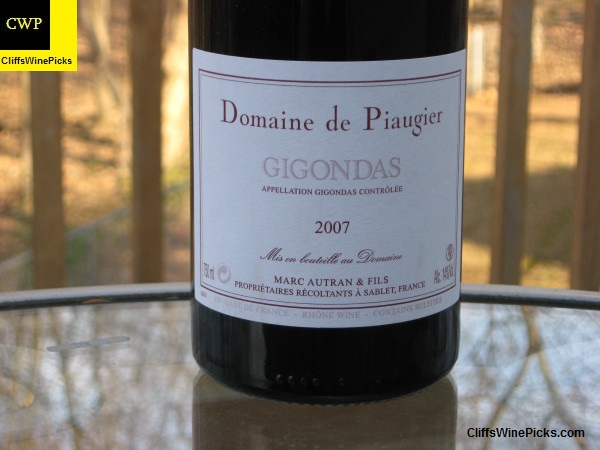
2007 Domaine de Piaugier Gigondas – $16.99


My comments

I ordered this in late 2008 from Garagiste.  By the time it arrived in their Washington warehouse all my other wines had shipped.  I cut down on my Garagiste purchases, so I received free storage for a couple of years.  I figured the wine was approaching a nice drinking window, so I made sure to order enough wine that these bottles would fill a case and be shipped.  They’ve been in the cellar for a month, so it’s time to try one out.


Winery history

Alphonse Vautour, Jean-Marc Autran’s great-grandfather, made his wine in a cellar at the top of a little hill called Les Briguières, to the south of Sablet where he owned six hectares of vines.  The winery was named Ténébi, after the previous owner of the house.


Alphonse had to go down the hill, his mules loaded with barrels, to wait for the wine merchant to come by.  If the merchant didn’t come, or didn’t buy his wine, he had to climb back up with his reluctant mules.  So, in 1947 he decided to build a new winery on the road below, where the Piaugier cellars are to this day.


Jean-Marc Autran, Alphonse’s great-grandson, took over the winery from his father Marc in 1985.  He acquired more vineyards and, with the assistance of his wife Sophie, started bottling and developed sales.  The winery soon became too small and they extended it in 1995 to enable them to age and store the wines in the best possible conditions.


In homage to this family history, Jean-Marc has dedicated a wine to his ancestor, the Réserve Alphonse Vautour, which is made from grapes grown in his original fields.


Today, Piaugier wines are sold as far away as the United States, Japan and Brazil.


Much more information is available at http://www.domainedepiaugier.com/en_index.htm


My Tasting Note

The wine is a medium to dark ruby color.  The very inviting nose has cherries, raspberries, baking spices, white pepper, fresh wild flowers, and lesser amounts of smoke, earthy elements, and dried herbs.  This has medium body with fairly solid tannins and very good acidity.  On the palate the spicy fruit commands center stage with the dried herbs and a touch of earthiness coming in on the edges.  The finish has decent length and leans heavily on the savory elements with the fruit just adding a touch of sweetness in the background.  A very nice Gigondas that is just entering a nice drinking window.  Enjoy over the next couple of years.  (90 pts)


Mailing Lists

Not much happening in the mailer arena right now but I’m sure there will be a few Winter releases hitting the inbox soon.


Wines bought or received this week


I received a couple of samples from Argentina that I am looking forward to trying.

2008 Serrera Bonarda

2009 Finca Algarve Torrontés Cinco Sentidos


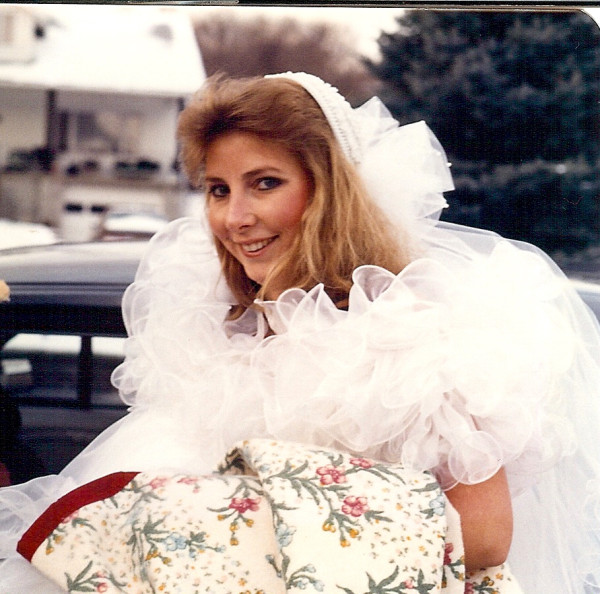
Not wine related, but November 21 was my 25th Wedding Anniversary.  I just wanted to say these last 25 years have been fantastic and hope for 25 more.


I Love You, Eva!
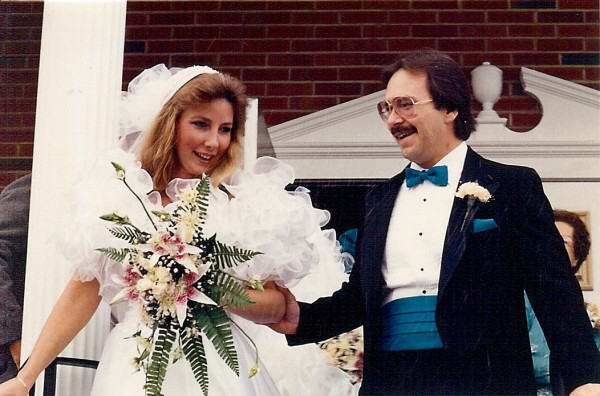


My beautiful bride.  She is still just as amazing and beautiful.


Remember to support your local wine store!


* * * * * * * * * * * * *


Notes – I use the “official” Cellar Tracker name for the wines.  I use Cellar Tracker to help manage and organize my cellar.  I highly recommend checking it out at www.cellartracker.com.  Loading you existing cellar is a lot less intimidating than it would first appear.  There is a good chance 99% of your wine is already in the system, so you generally only need to enter part of the wine’s name and the system will find it for you.


Prices noted are the prices I paid at the time of purchase.  I don’t shop around to find the best prices, but my local store is usually VERY competitive.  I generally get case discounts, and since I work there part time, I get a 5% discount.  Wines purchased direct from a winery do not include any shipping charges.  None of the prices include the sales tax.


All wines that were sent to me free of charge to sample will be noted and I will show suggested prices when available.


Cheers!


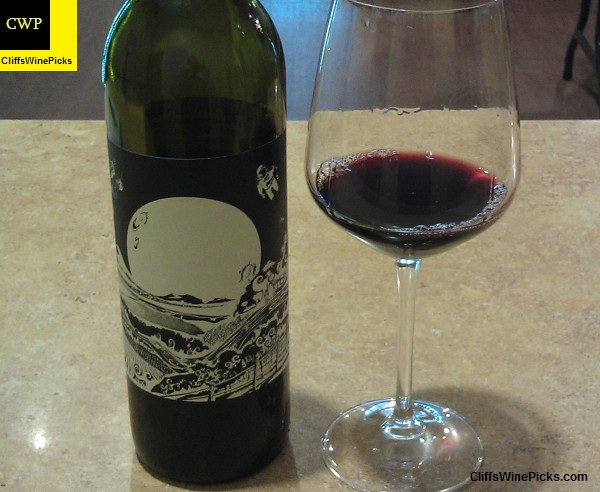
2009 One Time Spaceman Moon Duck


This is based on a sample supplied to me by the winery


This is your chance to get in on the ground floor of what may be the next big thing to come out of Paso Robles.  I’ve been a big fan of Mark Adams’ wines for a couple years and they are getting better every vintage.  Between this label, One Time Spaceman, and his other label (with his wife) Ledge, he is just one big score from one of the major wine publications from being a rock star.  Well, his music is very good, but in this case, I’m talking about a wine making rock star.  Jump aboard before this is another one of those wines that is unobtainable, ala Saxum, Carlisle, SQN…etc.


The One Time Spaceman wines are available mainly via the retail chain, but I highly recommend checking out Ledge and getting in on the mailing list.


Check out Ledge at:

http://ledgevineyards.com/index.php


More information on the One Time Spaceman wines is available at:

http://spacemanvineyards.com


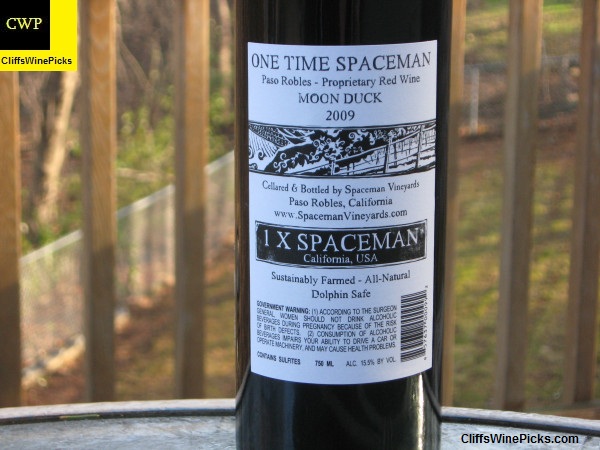
2009 One Time Spaceman Moon Duck – SRP $28.99


My comments

The illustrious winemaker/rocker for this is Mark Adams.  This is just one of the many hats worn by Mark.  For those in Paso Robles, he is equally well know for his music.


The Moon duck is a blend of Mourvedre, Syrah, Grenache blend with a splash of Tempranillo, all from small vineyards in the Paso Robles area.  The wine was aged in 100% oak, 50% new French oak, the remainder in neutral oak barriques.  The alcohol is a very well hidden 15.5%, which surprised me, it doesn’t show any heat nor does it show any overly ripe notes.


If you’re into scores, Steve Tanzer’s International Wine Cellar gave the previous vintage 90 points.  The current release of Mark’s 2010 Ledge Syrah Adams Ranch Vineyard just received a stellar 92 score from IWC.  It is my understanding, the 2010 Ledge is in short supply and I’d recommend checking them out at http://ledgevineyards.com/index.php.  I can say this since I put my money where my mouth is by grabbing a 6 pack when it was released.


Winery Tasting Note (Gotta love it)

This wine is a complex, fruit forward GSM Rhone blend crafted in the style that has made Paso Robles famous.  Aged in both new and neutral French oak this wine is out of this world.  The color of this wine is reminiscent of a Red Giant Star in its last phase.  On the nose it shows explosive Astro Berry, Plasma Spice and Cosmic Flower.  On the palate the bright arrogant fruit is held together perfectly by complex Interstellar Dust and a rich Nebula Core.  One Time Spaceman wines are unique, dramatic and boutique blends from some of the best sites in Paso Robles.  Each one is different, produced in small lots and represents an opportunity to try cult wines without the cult wine price.  Get it now before it is gone!  Appellation: Paso Robles  Production: 644 cases


My Tasting Note

The wine is a deep maroon color.  The very inviting nose features blackberries, dark chocolate, fresh ground espresso, earthy underbrush, baking spices, cherries and dried herbs.  This has medium to full body, solid, ripe tannins, and very good acidity.  On the palate the wine shows spicy, earthy fruit up front with dried herbs, chocolate, and espresso in the background adding considerable depth.  The finish is fairly long with dark chocolate and espresso melding nicely with the spicy berries.  This is still very young and some cellar time will be greatly rewarded.  (92 pts)


You have to love the fact the wine is 100% Dolphin Safe:


It may not be Rosé weather right now in a lot of the country, but I have had several bottles of the 2011 One Time Spaceman MCA Rosé and it was a very nice fruity wine.  There are a couple reviews of the wine in other postings here.


An example of some of Mark’s music:

http://www.markadamsusa.com/wp-content/uploads/2012/03/1.-Bus-Argument-final1.mp3


More music selections and additional information available at:

http://www.markadamsusa.com/


Remember to support your local wine store!


* * * * * * * * * * * * *


Notes – I use the “official” Cellar Tracker name for the wines.  I use Cellar Tracker to help manage and organize my cellar.  I highly recommend checking it out at www.cellartracker.com.  Loading you existing cellar is a lot less intimidating than it would first appear.  There is a good chance 99% of your wine is already in the system, so you generally only need to enter part of the wine’s name and the system will find it for you.


Prices noted are the prices I paid at the time of purchase.  I don’t shop around to find the best prices, but my local store is usually VERY competitive.  I generally get case discounts, and since I work there part time, I get a 5% discount.  Wines purchased direct from a winery do not include any shipping charges.  None of the prices include the sales tax.


All wines that were sent to me free of charge to sample will be noted and I will show suggested prices when available.


Cheers!


Nov 16, 2012 to Nov 18, 2012


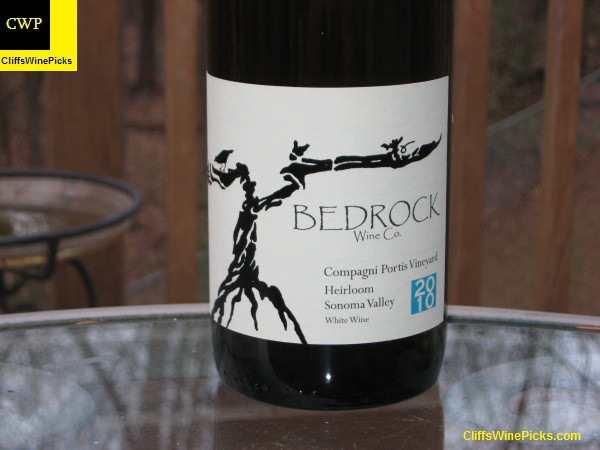
2010 Bedrock Wine Co. Heirloom Compagni Portis – $24.00


My comments

This wine is a field blend consisting of about a dozen different varietals from a vineyard planted in 1954.  This is how wines used to be made before people wanted to see a specific grape on the label.


I joined the Bedrock mailing list to get my hands on their red wines, but with every bottle of white wine I open, I am more convinced they are making some of the best white wines coming out of California.


Winery history

In 2009 I took this vineyard not really knowing what to expect.  Yes, I had tried the excellent wines made by my friend Will Bucklin, and  yes, I was besotted (as I often am by plants from California’s viticultural antiquity) with the nearly 60-year-old, dry-farmed, vines of varieties of many different hues and shades:  However, I was not expecting to fall in love.  For me, the odd combination of field-blended whites yields a wine that offers a glimpse at the white wines of yore in California.  Rose, lychee, and spice come from the Gewurtzraminer, while brightness and enough backbone are given by the Trousseau Gris, Riesling, Berger, Green Hungarian, and whatever else is out there.  For me it has exactly what I am looking for when it comes to an heirloom wine — it is a sporadic, seemingly random, assemblage of varieties that can only be found together here in California’s oldest vineyards and makes a wine more indicative of place than variety, spacing, farming, or anything else.   That said, farming is important, and this winter I decided, as many men do when their emotions get in the way of their better senses, to lavish the vineyard with some viticultural bling.  Decades of minimal farming (and who can farm when getting $1200 a ton!) had rendered a vineyard full of blackberries and poison oak, dead vine limbs fraught with eutypa and bot canker, missing vine positions, and limited vigor.  This winter vineyard manager Phil Coturri, the Compagni Portis family, and I, started a rejuvenation project.  Gone are the blackberries and poison oak stealing the vines water and causing pricks and rashes.  A pyre of the fungus ridden vine arms slowly killing the plants was set ablaze.  In their stead are a set of new wires, a full conversion to cane pruning to increase the number of spur positions and potential clusters (I love concentrated fruit but .9 tons per acre is simply economically unsustainable), and in the fall the first set of cover crops will be put down to add nutrients back to soil and increase friability and tilth.  What does this mean?  It means that Bedrock dropped some serious coin, but that we have taken the first step in making sure the vineyard will be around for another sixty years.  I say this as preamble to the raise in price from $20 to $24 dollars per bottle for the wine so you will know that I am not simply trying to line my pockets — in reality, selling all six barrels of the wine at this new price will only pay for half of the improvements.  Rather, I am hoping you will be willing to join me in preserving this one-of-a-kind vineyard from a bygone age.  As for the winemaking, this is a vineyard where I believe simplicity is key.  The wine was whole-cluster pressed and then fermented in stainless-steel and neutral oak barrels with native yeasts.  The richness of fruit and spice in 2010 prompted me to halt malolactic conversion to retain brightness to leaven the opulence of the fruit.  I am unquestionably pleased with the results.  Six barrels produced.


My Tasting Note

The wine is a bright golden yellow color.  The wine has an outstanding nose with beeswax, fresh flowers, peaches, apples, pineapple, flint, stony minerals, and spices.  This has light to medium body with crisp acidity.  On the palate the wine displays layers of fruit and spice with some nice minerality in the background adding considerable depth.  There is a long, lingering, flavor filled finish.  This is an outstanding effort and a big bargain at $24.  (92 pts)


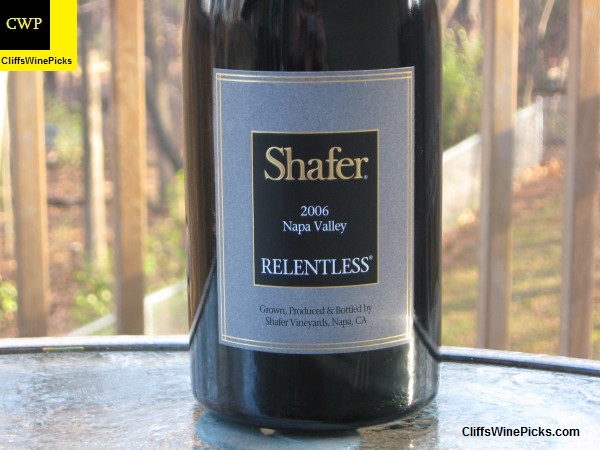
2006 Shafer Relentless – $42.74


My comments

I decided to open a Relentless to honor the fact the 2008 vintage of this wine was named Wine Spectator’s Wine of the Year.  I had a bottle about a year and a half ago just to check it out before giving it some cellar time.  I’ll probably open a bottle every year and a half over the next several years.


Winery history

Shafer Vineyards traces its beginnings to 1972 when John Shafer left a 23-year career in the publishing industry and, with his family, moved to the NapaValley to pursue a second career in wine.  After purchasing a 210-acre estate in NapaValley’s Stags Leap District, the Shafer family faced the arduous task of replanting the existing vineyards, which dated to the 1920s, and terracing the steep and rocky hillsides, eventually expanding vineyard acreage to its current 50 acres.


Evolving from grape growers to vintners, the Shafers crushed their first Cabernet grapes in 1978 and began construction on their winery a year later.


The first Shafer Cabernet became a benchmark, winning the acclaimed San Francisco Vintners Club taste-off upon release and, over a decade later taking first place in an international blind tasting held in Germany, where it outranked such wines as Chateau Margaux, Chateau Latour and Chateau Palmer.


Doug Shafer became winemaker in 1983 after graduating from the University of California at Davis with a degree in enology and viticulture.  A year later Elias Fernandez joined the winery as assistant winemaker.  Together Doug and Elias have worked closely to forge the Shafer style of quality, consistency and elegance.


New vineyards have been added over the years, with acreage acquired in the Oak Knoll, Stags Leap and Carneros districts, bringing the total Shafer vineyard acreage to over 200 acres.  Winery facilities have been expanded and extensive caves carved into the hillside for aging wine.


In 1994, Elias was appointed winemaker, and Doug took over the reins as president when John became chairman of the board.


From a modest beginning of 1,000 cases in 1978, the winery has grown steadily until reaching its present size of 32,000 cases of Cabernet Sauvignon, Merlot, Chardonnay, and Syrah.  Today Shafer wines are available in major markets nationwide and in many foreign markets.


My Tasting Note

The wine is a deep, dark, inky purple color.  The exotic and enticing nose has blackberries, fresh ground dark roasted coffee beans, dark chocolate, melted licorice, black pepper, smoke, black cherries, tar, and violets.  This is full bodied with solid, ripe tannins and good acidity.  On the palate there are layers of fruit and savory elements that thoroughly coat your  mouth.  The finish is fairly long and again is loaded with flavor.  Not a lot of subtlety here, just massive amounts of flavor, that are held in check by the outstanding tannic backbone and acidity.  (93 pts)


2005 Meritxell Palleja Priorat Nita – $16.74


My comments

I’ve been a big fan of the rugged, rough and tumble wines coming out of the Priorat for a number of years.  Generally these are not fruit forward wines, in a lot of cases they aren’t even fruit driven.  These are generally loaded with spice, dried herbs, minerals, and earthy elements.


Winery history

Following the family tradition, Meritxell Pallejà started off in the world of viticulture by studying oenology and assisting at wineries both in the region (Vilella de la Cartoixa, the Cooperativa Agrícola de Capçanes and Álvaro Palacios) and also in the Napa Valley and the French Burgundy (on that occasion at a biodynamic winery that would influence her own way of working).  NITA is her first wine (brought out in 2004 and called Cal Nita, named after her grandmother’s house in Falset).  It saw the beginnings of her biodynamic project that takes into account the lunar calendar not only in the production process but also in recommending the most opportune moment for drinking the wine.


The lunar calendar shows the relationship between various activities, such as the grape harvest, racking, bottling and even trying and tasting the wine, and the differing positions of the sun, planets, constellations and signs of the zodiac.  This means that it can be ascertained when wines are at a more or less active stage (a waxing or waning moon) or how a plant’s general health is being affected, which will come through in changes to colour, potency of aromas, flavours and essential properties.  For example, the wine will display its floral and fruity attributes to better effect if we drink it on “flower” or “fruit” days on the lunar calendar, and that is precisely when Meritxell suggests we open a bottle of her Nita.


My Tasting Note

The wine is a ruby red color, much lighter at the edge.  The old school nose features crushed rocks, blackberries, scorched earth, dried herbs, licorice, leather, tobacco, underbrush, and dried flowers.  This has medium body with sold tannins and very good acidity.  On the palate the initial fruitiness is quickly brushed out of the way by solid minerality, dried herbs, and earthy elements.  The long finish leans on the savory elements with the fruit in the background.  The finish is like a mouthful of crushed stones and dried herbs with one solitary blackberry providing some sweetness.  This is still on the young side but if you don’t mind solid tannins, it’s in a great place right now.  (92 pts)


2004 Adriano Marco e Vittorio Barbaresco Basarin – $34.80


My comments

I’ve had three bottles of this wine in the cellar for close to 4 years.  Every time I check my inventory for an Italian wine, this is the first wine I see, since my inventory is sorted in alphabetical order on the wine name.  It’s probably still on the young side, but it’s time to check in to see how the wine is coming along.


Winery history

The Azienda Agricola Adriano Marco e Vittorio farm is located in the heart of the Langhe, at Frazione San Rocco Seno d’Elvio, over the beautiful Alba, producing wines with the unique characteristics of the territory. It is a family run company, who has been producing wine from its own grapes for generations. At the beginning of the 20th century, Giuseppe, the grandfather, who was share-farmer, started his activity of growing grapes. Later on, he purchased a small farm and together with his son Aldo, expanded the family property planting new vines. The grandsons, Marco e Vittorio, continued this expansion, introducing big changes as the wine-making and the bottling of their own production. The farm has currently an extension of 22 hectares of vineyards of NEBBIOLO for BARBARESCO, BARBERA, DOLCETTO, FREISA, SAUVIGNON and MOSCATO; 8 hectares are dedicated to the hazelnuts, typical from the Langhe region and 10 hectares are divided in meadows, fallow land and forests where the famous White Truffle from Alba can be found.


My Tasting Note

The wine is a medium to dark ruby red color.  The very enticing nose has cherries, earthy underbrush, baking spices, fresh ground espresso, dark chocolate, dried herbs, and fresh flowers.  This had medium body with fairly solid tannins and very nice acidity.  On the palate the earthy, savory notes command center stage with dried herbs and fruit on the sidelines.  The finish has nice length and again highlights the savory elements.  This is still very young but tasty.  (90 pts)


Mailing Lists

Getting a few random offers with Holiday offers, mainly for wines I either already have or passed on earlier.


Wines bought or received this week

It was a busy receiving week.


From Garagiste

(6) 2005 Frenchman Hills Red Wine Sentinel Gap Vineyards

(6) 2001 Weinhofgut Anton Zimmermann Bernkastel-Kueser Weisenstein Riesling Auslese

(6) 1998 Weinhofgut Anton Zimmermann Bernkastel-Kueser Weisenstein Riesling Auslese

(3) 2010 Domaine du Colombier Crozes-Hermitage


From Loring

(4) 2011 LoringWineCompanyPinotNoirRussianRiverValley

(4) 2011 Loring Wine Company Pinot NoirSantaLuciaHighlands

(4) 2011 LoringWineCompanyPinotNoirStaRitaHills

(3) 2011 Loring Wine Company Pinot Noir Rosella’s Vineyard

(3) 2011 Loring Wine Company Pinot Noir Keefer Ranch Vineyard (375 ml)

(6) 2011 Loring Wine Company Pinot Noir Garys’ Vineyard (375 ml)


Remember to support your local wine store!


* * * * * * * * * * * * *


Notes – I use the “official” Cellar Tracker name for the wines.  I use Cellar Tracker to help manage and organize my cellar.  I highly recommend checking it out at www.cellartracker.com.  Loading you existing cellar is a lot less intimidating than it would first appear.  There is a good chance 99% of your wine is already in the system, so you generally only need to enter part of the wine’s name and the system will find it for you.


Prices noted are the prices I paid at the time of purchase.  I don’t shop around to find the best prices, but my local store is usually VERY competitive.  I generally get case discounts, and since I work there part time, I get a 5% discount.  Wines purchased direct from a winery do not include any shipping charges.  None of the prices include the sales tax.


All wines that were sent to me free of charge to sample will be noted and I will show suggested prices when available.


Cheers!


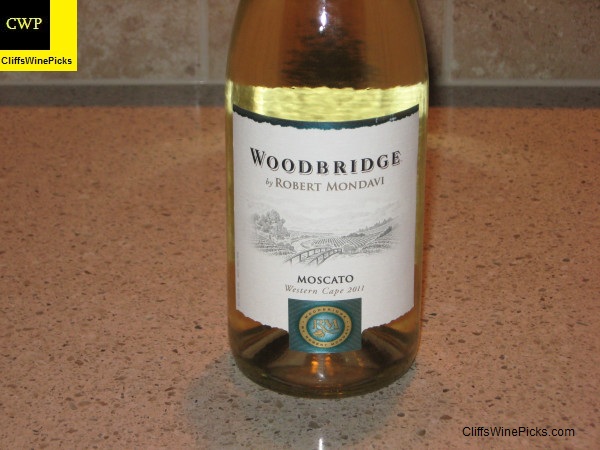
2011 Woodbridge by Robert Mondavi Moscato


Your Holiday Moscato


This review is based on a sample supplied by the winery or another organization acting on their behalf.


2011 Woodbridge by Robert Mondavi Moscato – SRP $7.99


My comments

It’s getting to be the time of the year where any holiday party or family gathering will require a bottle of an off dry, fruity wine to satisfy your guests.  In this area, nothing really fills that hole better than a Moscato.  A Moscato is like a fruit salad in a glass.  They generally have a very appealing nose full of fruit ranging from apples and pears to peaches and apricots and everything in between.  Moscato wines range from just barely off dry to very sweet and sugary.  Some Moscato wines have a slight effervescence that helps keep them light on the palate and adds to the festive atmosphere.


I was a bit surprised when I noticed the grapes for this wine are actually from the Western Cape of South Africa.  It’s nice to see a winery search all over the world for grapes that may otherwise not find a route to a table in the United States.


This wine is a blend of 94% Muscat Alexander and 6% Chardonnay that has 4.4% residual sugar and an alcohol level of 11.5%.


Winery history

In 1930 the Cherokee Vineyard Association was established near the town of Woodbridge.


In 1979 the Robert Mondavi family bought the Cherokee Vineyard Association and renamed it Woodbridge.


Over thirty years ago, Robert Mondavi set out to establish a wine culture in America by putting great California wine on every table. In 1979 he established the Woodbridge Winery near his childhood home of Lodi, California. His name is on the bottle. His story is in it.


My Tasting Note

The wine is a pale, clear, yellow to straw color.   The fresh and fruity nose features apples, peaches, apricots, minerals, orange zest, and fresh flowers.  The wine is light to medium body with light sweetness, soft acidity, and just a touch of effervescence.  The wine is lightly sweet but not cloying.  On the palate the sweet, juicy peaches take center stage with apples, minerals, and orange zest in the background.  The finish is fairly long with the sweet fruit very slowly fading away.  I can see this being a big hit at a family gathering or party over the upcoming holiday season.


Here is a recipe from the winery using the wine.


Woodbridge by Robert Mondavi Moscato Tips & Tricks

By Candice Kumai


 Sweet Peach and Moscato Preserves


Ingredients

8  Ripe peaches, sliced 1/2 inch thick

3 Cups sugar

2 Tablespoons fresh lemon juice

Rind of 1 lemon, peeled into large pieces using vegetable peeler

1 cup of 2011 Woodbridge by Robert Mondavi Moscato

1 and a half -3oz packages liquid sure gel pectin

1 Tablespoon mint, sliced into thin ribbons

6-7 Sterile ½ pint mason jars with lids


Instructions

1. In a medium stockpot, combine peaches, sugar, lemon juice, lemon rind and Moscato, bringing to a boil.


2. Stirring gently, reduce to a slow simmer over medium heat. Cook 45 minutes, stirring occasionally.


3. Some foam may appear at the top of the pot, using a spider or a slotted spoon skim off the foam and discard. Remove lemon rind with a fork.


4. Add mint and cook for an additional 2-3 minutes.


5. Remove from the heat and add the liquid pectin stirring constantly. Return to a full rolling boil and cook for 1 minute. Quickly and very carefully ladle the preserves into sterilized jars, leaving 1/2 in head space at the top.


6. Place the lids on top of the jam jars. Carefully twist on the tops.


7. To Seal: Gently, place the jars in a large stockpot full of boiling water. Make sure that the jars are fully submerged in the boiling water. Let it sit in the simmering water for 10-15 minutes to set. Jars should seal by then. If not, they will seal while cooling.


8. Remove jars after 10-15 minutes, set aside to cool and set. You will hear a “pop” noise when jars are sealed.


9. Allow jars to set for 24 hours before opening.


Remember to support your local wine store!


* * * * * * * * * * * * *


Notes – I use the “official” Cellar Tracker name for the wines.  I use Cellar Tracker to help manage and organize my cellar.  I highly recommend checking it out at www.cellartracker.com.  Loading you existing cellar is a lot less intimidating than it would first appear.  There is a good chance 99% of your wine is already in the system, so you generally only need to enter part of the wine’s name and the system will find it for you.


Prices noted are the prices I paid at the time of purchase.  I don’t shop around to find the best prices, but my local store is usually VERY competitive.  I generally get case discounts, and since I work there part time, I get a 5% discount.  Wines purchased direct from a winery do not include any shipping charges.  None of the prices include the sales tax.


All wines that were sent to me free of charge to sample will be noted and I will show suggested prices when available.


Cheers!


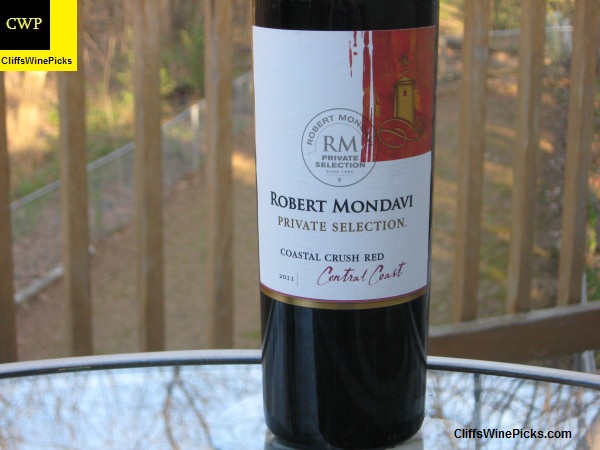
Robert Mondavi Private Selection Coastal Crush Red


This review is based on a sample supplied by the winery or another organization working on their behalf.


2011 Robert Mondavi Private Selection Coastal Crush – SRP $11.00


My comments

This is a blend of 67% Syrah, 24% Merlot, and 9% Malbec.

The grapes are from MontereyCounty(57%), San BenitoCounty(20%), Paso Robles(13%), and Valley South(10%),

The wine was aged in French and American oak for 10 months.  The alcohol by volume is 13.5% and there is 8g/L of residual sugar.


This wine was sampled as part of a ToastCentralCoast WineChat on Twitter hosted by the winery.


Winery history

I think most readers of my blog know the sometimes turbulent history of the iconic Robert Mondavi Winery.  Since the scope of this piece is their “Private Selection” line of wines, I’ll showcase that part of the winery’s history.


(from the winery website)

Robert Mondavi developed a deep appreciation for the distinctive vineyards of California’s coast during the course of decades sourcing fruit from the region.  In 1994, Robert Mondavi Private Selection wines was founded with this appreciation in mind, and a mission to exclusively draw from North and Central Coast appellations, showcasing the high quality and varied character of these grapes.


The allure of the California coast is simple: it is a region of tremendous varietal quality and versatility that can be used by a winemaker much as an artist uses a broad palette to blend color and create a remarkable finished piece.  In this case, the result is a high quality, affordable fine wine born of the best of California’s diverse growing regions.


Robert Mondavi Private Selection produces Chardonnay, Cabernet Sauvignon, Merlot, Pinot Noir, Pinot Grigio, Sauvignon Blanc, Fume Blanc, Syrah, Zinfandel and Riesling. These wines – from light and lively to full-bodied and concentrated – have approachable bright fruit expression and exceptional balance, as well as great depth and texture.  All are crafted to be enjoyed upon release.


My Tasting Note

The wine is a medium to dark ruby color.  The very fruity nose has strawberries, black cherries, spice, licorice, chocolate, and some black pepper.  This has medium body with soft, ripe tannins, decent acidity, and just a touch of residual sugar.  This has big, sweet, juicy fruit on the palate but with some air, licorice, spice and chocolate join in making it an easy drinking wine.  The finish has nice length with a bit extra spice adding some depth.  This is an easy drinking wine that would be perfect to share with friends or relatives over the upcoming holiday season.


Remember to support your local wine store!


* * * * * * * * * * * * *


Notes – I use the “official” Cellar Tracker name for the wines.  I use Cellar Tracker to help manage and organize my cellar.  I highly recommend checking it out at www.cellartracker.com.  Loading you existing cellar is a lot less intimidating than it would first appear.  There is a good chance 99% of your wine is already in the system, so you generally only need to enter part of the wine’s name and the system will find it for you.


Prices noted are the prices I paid at the time of purchase.  I don’t shop around to find the best prices, but my local store is usually VERY competitive.  I generally get case discounts, and since I work there part time, I get a 5% discount.  Wines purchased direct from a winery do not include any shipping charges.  None of the prices include the sales tax.


All wines that were sent to me free of charge to sample will be noted and I will show suggested prices when available.


Cheers!


Nov 12, 2012 to Nov 15, 2012


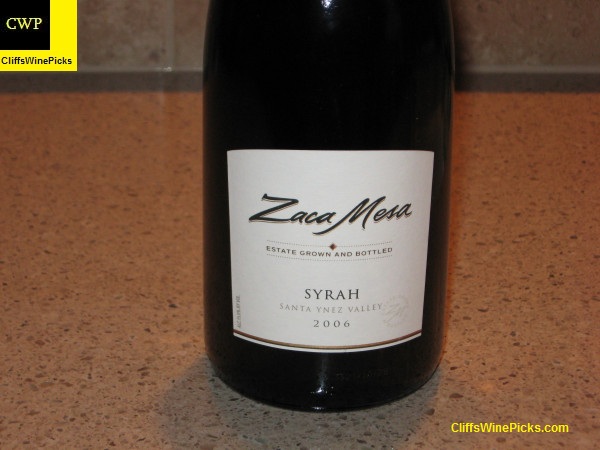
2006 Zaca Mesa Syrah – $15.67


My comments

This is generally a good California Syrah at a wallet friendly price.  In some vintages it seems to have that little something extra that propels it to the next level.  In my opinion, 2006 was one of those years.  I bought a half case of this from my local store and after killing two bottles fairly quickly, I’ve been showing some unusual restraint.  Even with the restraint, I’ll only have one bottle left after popping this one.  I have the 2007 in the cellar, but based on the one bottle I had upon release, it dropped back into the merely good category.


Winery history

The original property was purchased in 1972 by a group of friends and they started planting the vineyard in 1973.  With few other vineyards in the area to learn from, the vineyard was originally planted with numerous varieties such as Cabernet Sauvignon, Merlot, Zinfandel, Riesling, Pinot Noir, Sauvignon Blanc, Chenin Blanc, Grenache, Chardonnay, and Syrah to see what would work.


As the vineyard came into production, a winery was built on the property in 1978 and later expanded in 1981.  1978 was another milestone for Zaca Mesa, planting the first Syrah in Santa BarbaraCounty.


By the early-1990’s, we had determined based on our farming experience that the Rhône varieties (Syrah, Grenache, Mourvèdre, Viognier, and Roussanne) grew best on our property.


As one of the pioneers in the Santa BarbaraCounty, Zaca Mesa was a training ground for many.  Ken Brown was our first winemaker and later started Byron in Santa MariaValley.  Adam Tolmach, Jim Clendenen and Bob Lindquist worked at Zaca Mesa before venturing out on their own to start Ojai, Au Bon Climat and Qupé, respectively.


Zaca Mesa was the first CentralCoast winery to appear in Wine Spectator’s Top 10 back in 1995.  A year later, our Syrah was served by President Clinton to French President Jacque Chirac at a White House State Dinner.  To show that we are not leaning one direction, our wines were also served at President Reagan’s 80th birthday party at the Beverly Hilton.


Since 1997, we have focused on growing the best Syrah, Viognier, and other Rhône varieties.  We have ripped up over half the original vines, replacing them with high-density planting of new rootstock and clone combinations that has significantly improved our quality.  We now have 9 clones of syrah and the most high density vineyard acres in the county.


Over time the ownership group diminished to one of the original partners. Zaca Mesa has been family owned for almost 25 years.


My Tasting Note

The wine is a deep, dark maroon color.  The outstanding nose has blackberries, licorice, smoked meat, black pepper, vanilla, plums, violets, dried herbs, and a bit of dark chocolate.  This is fairly full bodied with solid tannins and very nice acidity.  On the palate the peppery berries lead the way with some chocolaty oak and dried herbs in the background adding depth and complexity.  The finish features nice fruit leading to dark chocolate and dried herbs, but it could be a touch longer.  An outstanding week night Syrah for well under $20.  (90 pts)


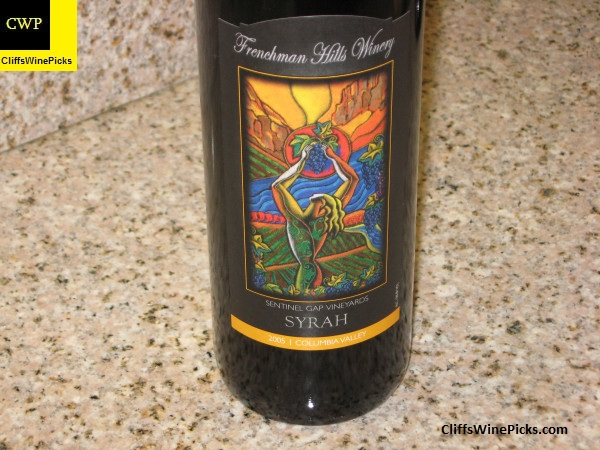
2005 Frenchman Hills Syrah Sentinel Gap Vineyards – $7.99


My comments

This was a blind purchase, which I usually avoid.  This was one of the infamous Garagiste Mystery Wines from an offer at the end of August.  For those keeping score, this was Mystery Wine #50, a Washington State Syrah for $7.99 a bottle.


My expectations were low, this was ordered just to fill one last case before shipping season.  After receiving the wine, my expectations were raised considerably.  The average price paid on CellarTracker was close to $30 and the two notes didn’t sound too bad.


Winery history

Not much information available on the internet about the winery.


My Tasting Note

The wine is a deep maroon color.  The nose is a bit shy but reveals blackberry, licorice, dried herbs, black pepper, and a touch of dark chocolate.  This has medium to full body with fairly solid tannins and very nice acidity.  Nice spicy, peppery berries greet the palate in a laid back style.  This is not a big, ripe, fruit forward, fruit bomb,  This is fairly elegant and nuanced, perfectly concealing its 15% alcohol.  The finish has nice length and shows a bit more fruit than the savory elements.  A solid bottle of wine for those who jumped on the Garagiste Mystery Wine offer.  A steal at $8.  (88 pts)


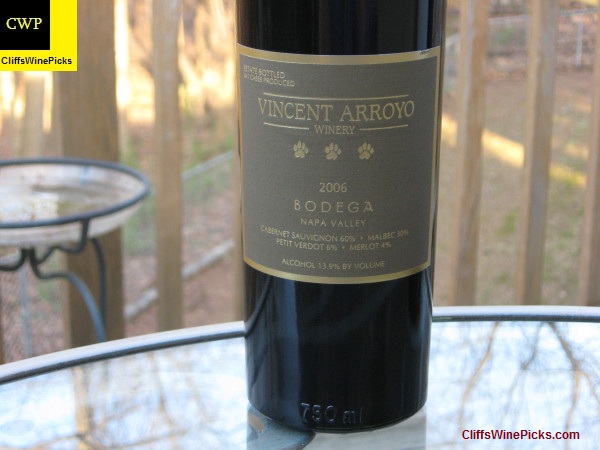
2006 Vincent Arroyo Bodega – $19.99


My comments

I’ve been a long time supporter and buyer of the wines from Vincent Arroyo.  This wine is a blend of 60% Cabernet Sauvignon, 30% Malbec, 6% Petit Verdot, and 4% Merlot.


Winery history

Walking into the Vincent Arroyo Winery, one gets the sense that it has been here forever.  Is it just the comfortable atmosphere of a big barn full of oak wine barrels that lends to the sense of permanence?  Vincent Arroyo, himself, may feel like he has been here forever, as well.  He left behind a career as a mechanical engineer in the Silicon Valley during the early 70’s and headed to Calistoga, at the northern tip of the NapaValley.  He felt much more at home close to the land, being able to see and taste the fruits of his labors.


The purchase of the 23 acres of the Greenwood Ranch property in 1974 began the evolution of what is seen today, 85 acres cultivating 9 different wine grape varietals.  Vince has always been a farmer at heart, taking care of the land to produce the best that it can.  He began to transform the Greenwood Ranch by ripping out existing prune trees and unhealthy vines and planting new vineyards.  For many years, he did it all alone, the tractor work, cellar work and a one-man sales force.  Originally he made just a few hundred cases of his favorites, Petite Sirah and Cabernet, selling the majority of the grape tonnage to other Napa wineries.  Today, he produces over 8,000 cases of seven different varietals.


The wines produced at the Vincent Arroyo Winery have put a star on many NapaValley maps as a place that shouldn’t be missed.  His signature wine, still Petite Sirah, has become so popular that it often sells out before it is bottled every year.  Once you have tasted the wines, you’ll know why.  The winery also makes a Chardonnay, Cabernet Sauvignon, Merlot, Sangiovese, Zinfandel and several red blends.


More information is available at http://www.vincentarroyo.com/


My Tasting Note

The wine is a medium to dark garnet color.  The very appealing nose features blackberries, baking spices, cedar, tobacco, cherry, vanilla, and a bit of earthiness.  This has medium body with fairly solid tannins and very nice acidity.  On the palate the spicy fruit hits first with some cedar and earthiness in the background adding depth.  The finish has nice length with cherries and spice carrying the load.  A very nice Bordeaux style blend from Napa.  (90 pts)


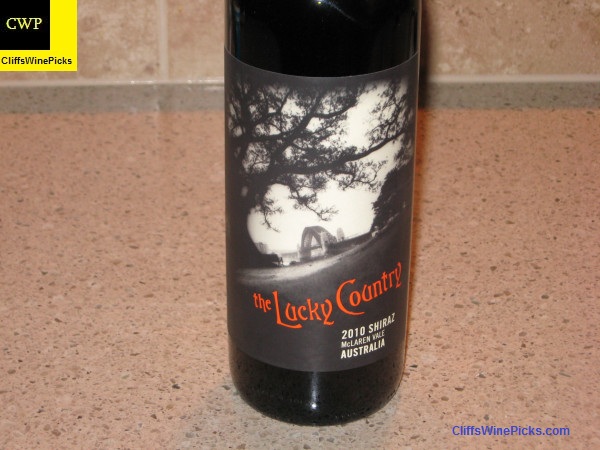
2010 The Lucky Country Shiraz – $9.90


My comments

It’s been a while since I opened a bottle of this wine.  I opened one not long after picking up a case at my local store.  The wine was decent, but seemed to be a bit below the previous vintage.  I felt a bit of cellar time should help the wine settle down a bit.  It’s time to check in to see how it is doing.  This is made by the team behind Two Hands, and the general thought is this is the declassified fruit from Two Hands.


Winery history

The Lucky Country Wines offers quality wines packaged with iconic Australian photography, representing the lively spirit of Australia.


The name is taken from the 1964 book, The Lucky Country, written by social critic Donald Horne and was originally written to be ironic, as an indictment of 1960’s Australia.  Donald believed that the economic success of 60’s Australia was derived from luck rather than skill.


But over the years, this phrase has taken on new meaning and is now proudly used by many to describe what is great about Australia.


The Lucky Country Wines is the result of hard work combined with vision, creative acumen and business ‘smarts’, and maybe just a little bit of luck to help bring it all together.  The wines are already proving a hit, available in several markets around the world and with the brand continuing to grow every day.


The Lucky Country Wines were created to deliver great value, stylish wines to drinkers at a reasonable price.  People everywhere can now share and enjoy the experience of what makes Australia the Lucky Country.


My Tasting Note

The wine is a deep purple color.  The very Australian nose features blackberries, blueberries, black pepper, vanilla, baking spices, and wild flowers.  This has a medium body with soft, ripe tannins and decent acidity.  On the palate the big fruit and peppery spice carries the load with a touch or chocolate and earthiness in the background.  The finish has decent length with sweet berries and spice.  This seems to carry a touch of residual sugar but not enough to really stick out.  This would be a nice holiday party wine.  (87 pts)


 Wines bought or received this week

It was a busy receiving week so far.  I received a couple cases from Garagiste and have a couple cases due in tomorrow from Loring.  I’ll list all the wines received in my weekend blog, to be posted on Sunday evening.


Remember to support your local wine store!


* * * * * * * * * * * * *


Notes – I use the “official” Cellar Tracker name for the wines.  I use Cellar Tracker to help manage and organize my cellar.  I highly recommend checking it out at www.cellartracker.com.  Loading you existing cellar is a lot less intimidating than it would first appear.  There is a good chance 99% of your wine is already in the system, so you generally only need to enter part of the wine’s name and the system will find it for you.


Prices noted are the prices I paid at the time of purchase.  I don’t shop around to find the best prices, but my local store is usually VERY competitive.  I generally get case discounts, and since I work there part time, I get a 5% discount.  Wines purchased direct from a winery do not include any shipping charges.  None of the prices include the sales tax.


All wines that were sent to me free of charge to sample will be noted and I will show suggested prices when available.


Cheers!


The Seeker Wines – Around the World in a bottle


These reviews are based on samples provided by the winery or an organization acting on their behalf.


Winery Information  (winery supplied)

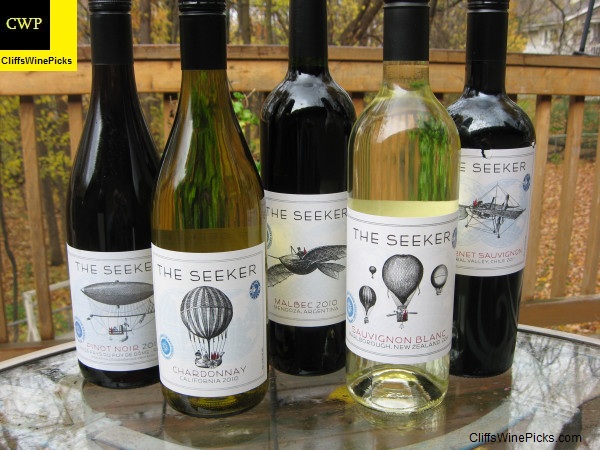
The Seeker Wines is a new line of carefully curated wines created for those who love to seek adventure.  Our wanderings yielded five unique varietals– a California Chardonnay, New Zealand Sauvignon Blanc, French Pinot Noir, Argentine Malbec, and Chilean Cabernet Sauvignon, each sourced from top-quality wineries celebrated for their excellence and dedication to sustainable practices and local printing.  Whether roaming far-off lands or exploring Facebook, Pinterest, and Twitter, The Seeker delights the senses on a global taste journey.  Just glance at the labels and you’ll see mid-19th century flying machines that beckon a bygone era of wonder and mystery that reminds us why exploring the unknown world is all about the journey.


The Seeker Wines were created by a family company that called on its 65+ years of experience to source from the best family-owned wineries in the world at an affordable price.  With a dedication to reducing our carbon footprint, The Seeker Wines extends our eco-friendly philosophy from our immediate family to our global family.  So whether by land, sea, or air, take flight with us and seek more information at http://theseekerwines.com


All wines have a suggested retail price of $10 to $15.


All wines were sampled over most of an evening.  This allowed me to capture each wine when it was at its peak.


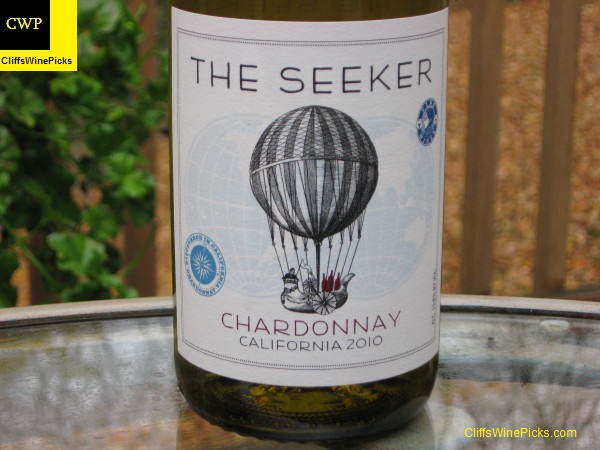
2010 The Seeker Chardonnay


My comments

The wine is 97% Chardonnay with 3% Gewürztraminer.  The grapes were sourced from cool climate vineyards in California.


The wine has 13.8% alcohol and was aged in tank on light lees with no oak.  A small portion under went malolactic fermentation, which adds a bit of creaminess and body to the wine.


This wine was produced in a state of the art, family owned winery utilizing solar and water conservation technology.


My Tasting Note

The wine is a light yellow to straw color.  The fresh nose features apples, pears, pineapples, lemon zest, minerals, fresh flowers, and spices.  This has medium body with decent acidity.  On the palate, the wine is fairly creamy and rich with the apples and pears upfront and pineapple and spices in the background.  On the backend, the wine turns a bit flat and loses a bit of focus.  On the finish a bit of citrusy acidity attempts to pull the wine back into focus and generally succeeds.  A slight herbal note lingers on the finish that could be useful in pairing the wine with food.  I would serve this well chilled to help preserve the acidity on the backend.  I think this would work well with a cool chicken salad with a bit of tarragon added just before serving.  (85 pts)


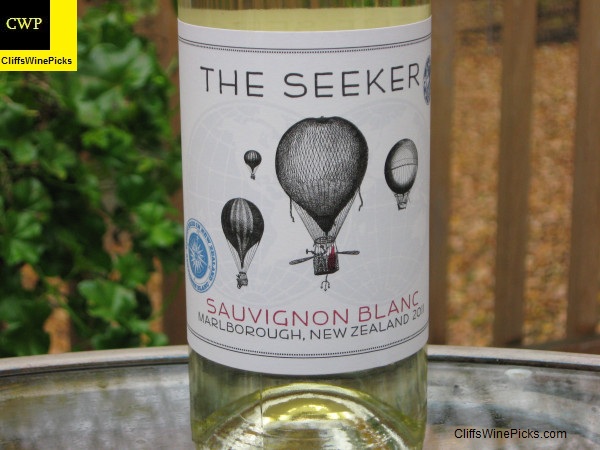
2011 The Seeker Sauvignon Blanc


My comments

The wine is 100% Sauvignon Blanc which was sourced from both Marlborough on the south island and Martinborough on the north island.


The wine has 12.7% alcohol and was aged 2 months in tank on light lees. After the aging, the lots were blended then gently fined and filtered before bottling.


My Tasting Note

The wine is a very light, clear, yellowish straw color.  The exotic, unusual, and appealing nose features musk laden apples, mint, lime, white pepper, saline minerality, and orange blossoms.  The wine has light body and features crisp, citrusy acidity.  On the palate the sweet, minty apples and spice get a boost when the lime kicks in.  The finish is fairly long with the saline laced minerals adding nice complexity.  This would be perfect with a relaxing dinner on the patio or deck with some grilled shellfish or a salad.  My vote would be to serve this with a shrimp salad served on a delicate, flaky croissant.  (90 pts)


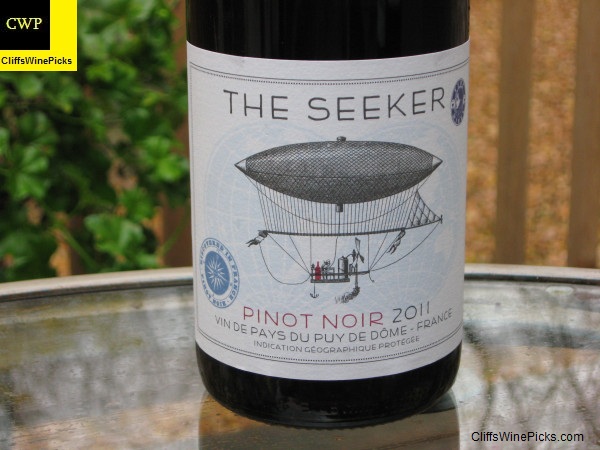
2011 The Seeker Pinot Noir


My comments

The wine is 100% Pinot Noir from vineyard sites in Auvergne.  The vineyards are on rich volcanic soils 350-500 meters above sea level.  The vines range in age from 15 to 40 years old.


The wine has an alcohol of 13.5% and was aged in tank on light lees with no oak.


My Tasting Note

The wine is a light, clear, ruby red color.  The light and fresh nose features cherries, Asian spices, raspberry, and some soft earthiness.  This is medium body, at most, with ripe tannins and very nice acidity.  On the palate the wine shows spicy, red fruit with a slowly building earthy element.  The finish is more on the earthy side with the red fruit and spice more in the background.  In my opinion, this was much better with some air.  The wine initially had candied red fruit front and center which was a bit distracting.  With the air the candied elements dissipated allowing the spice and earthiness to come through.  This would work well with chicken and pork dishes and may hold up well to a rich, creamy pasta dish.  My vote would be to give the wine an hour of air and serve with Fettuccine Alfredo with some sliced grilled chicken.   (87 pts)


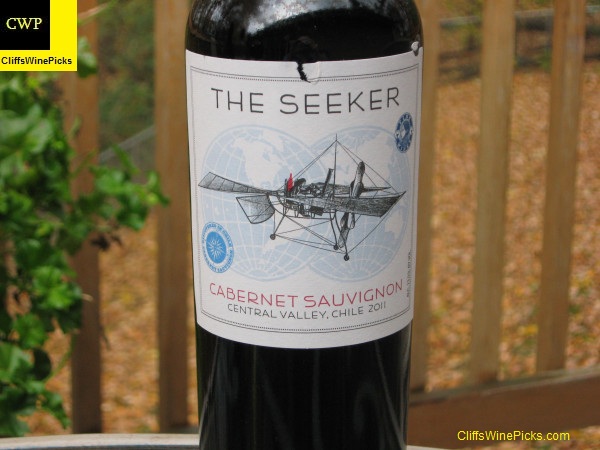
2011 The Seeker Cabernet Sauvignon


My comments

The wine is 100% Cabernet Sauvignon from vineyards in both the Maipo and Colchagua Valleys.  The vineyards are 17 years old and planted in clay and alluvial soils.


The wine has an alcohol level of 13.5%.  The wine was aged 5 months in 20% new oak.  The oak was 50% American and 50% French.


My Tasting Note

The wine is a medium ruby color.  The deep and dark nose features cassis, dark roasted coffee beans, smoke, dark chocolate, spices, dried herbs, vanilla, and some subtle earthiness.  This has medium body with fairly solid tannins and very nice acidity.  The upfront spicy and earthy cassis hits the palate first followed by some nice dark roast coffee and dark chocolate.  On the backend, as the fruit fades the earthiness takes over with a bit of dried herbs.  The finish has decent length but could use a touch more fleshiness.  This would be nice with a pot roast or beef stew.  My vote would be to serve with a medium rare sirloin steak that was seared to a nice charred exterior.  (88 pts)


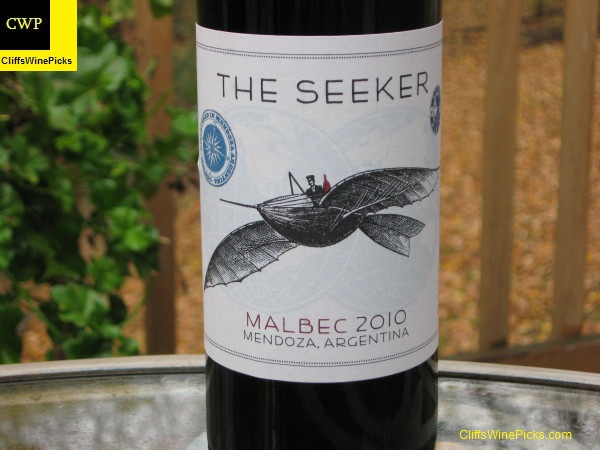
2010 The Seeker Malbec


My comments

The wine is 85% Malbec with 10% Bonarda and 5% Cabernet Sauvignon.  The vineyards are Agrelo and Vistaflores in Lujan de Cuyo.


The wine has 14.5% alcohol and was aged for one year in French oak and a minimum of two months in bottle before release.


My Tasting Note

The wine is a deep, dark ruby to maroon color.  The very open and inviting nose features cherries, blackberries, licorice, Asian spices, earthy underbrush, mocha, and some violets.  This is medium to full bodied with fairly solid, ripe tannins and nice acidity.  On the palate the wine leads off with the spicy cherries and berries but the building mocha and earthy elements soon take center stage.  The earthy, dark chocolate flavors continue right through the finish, which has nice length.  This greatly improved with an hour of air, which helped it to add some weight and fill out the finish.  Serve this with something hot off the grill.  My recommendation would be a skirt steak with a bit of fine ground espresso added to the meat before a few minutes on a very hot grill.  (88 pts)


Contact information


More information can be found on the winery’s website at http://theseekerwines.com


You can follow the winery on Twitter at http://twitter.com/theseekerwines or check them out on Facebook at http://www.facebook.com/theseekerwines


Remember to support your local wine store!


* * * * * * * * * * * * *


Notes – I use the “official” Cellar Tracker name for the wines.  I use Cellar Tracker to help manage and organize my cellar.  I highly recommend checking it out at www.cellartracker.com.  Loading you existing cellar is a lot less intimidating than it would first appear.  There is a good chance 99% of your wine is already in the system, so you generally only need to enter part of the wine’s name and the system will find it for you.


Prices noted are the prices I paid at the time of purchase.  I don’t shop around to find the best prices, but my local store is usually VERY competitive.  I generally get case discounts, and since I work there part time, I get a 5% discount.  Wines purchased direct from a winery do not include any shipping charges.  None of the prices include the sales tax.


All wines that were sent to me free of charge to sample will be noted and I will show suggested prices when available.


Cheers!


Nov 9, 2012 to Nov 11, 2012


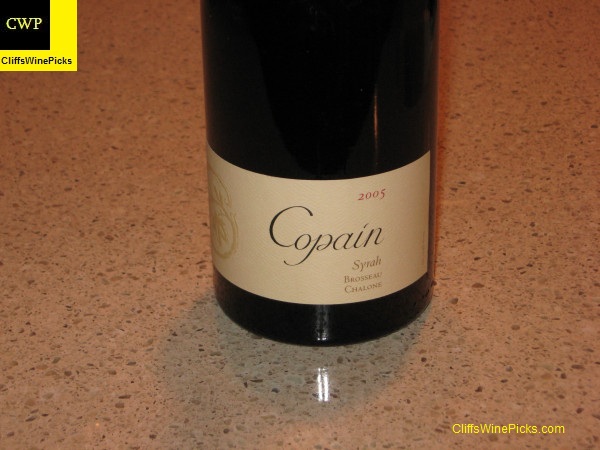
2005 Copain Syrah Brosseau Vineyard – $45.00


My comments

The last few 2005 Copain Syrahs I’ve had have been outstanding.  I bought a three pack of this wine in October 2007, this will be the first I have opened.  This is one of the nice parts of having a fairly large wine cellar, you have enough other choices so you have the opportunity to let a wine sleep until it gets into a prime drinking window.  I have a feeling this will benefit from a couple more years in the cellar but I won’t know for sure until I try one.


Winery history

Wells Guthrie discovered early on that his taste in wine gravitated toward Europe in general and France’s RhôneValley in particular.  So much so, he picked up and moved with his new bride to the region to learn from the best.  For two years, Wells apprenticed for esteemed winemaker and living legend Michel Chapoutier in France’s RhoneValley.  During that time, Wells was deeply inspired by the traditions and practices of French winemaking, not to mention the European attitude that wine is an essential part of life.  At Copain, he creates wines that are firmly rooted in California, yet with the sensibilities of the European wines that so moved him.  He is as committed to crafting these elegant, nuanced wines as he is to building a legacy that will be passed down to his daughters in the great tradition of European winemakers whose estates have been in the same family for generations.


My Tasting Note

The wine is a deep, dark purple color.  The deep and dark nose has blackberries, dried herbs, charred meat, black pepper, minerals, dark chocolate, and fresh ground espresso.  This has medium to full body with big, solid tannins and very nice acidity.  On the palate the wine is much more reminiscent of a French Northern Rhone than a ripe and fruity California Syrah, think higher end Hermitage.  Meaty, spicy fruit with dried herbs hit the palate first with the dark chocolate and ground espresso beans coming in on the back end.  The finish has nice length but may be clipped a bit when the tannins and acidity clamp down.  If chewy tannins don’t bother you, this is drinking very nicely with some air, if you prefer fully integrated tannins, this may take a few more years in the cellar.  I say, give a bottle a couple hours of air and serve with a nice, rare to medium rare roast beef this Winter.  (94 pts)


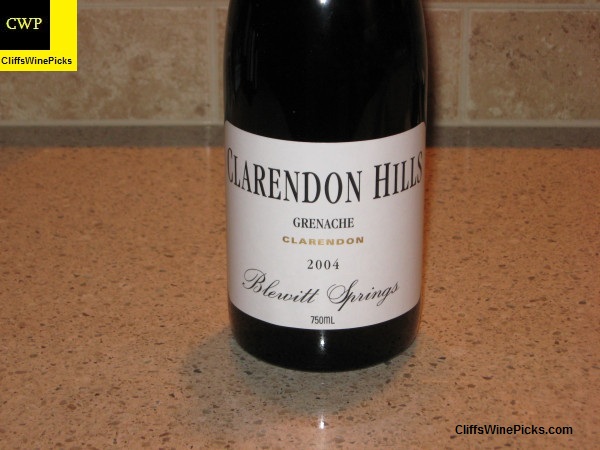
2004 Clarendon Hills Grenache Old Vines Blewitt Springs – $25.00


My comments

I’ve sampled a few Clarendon Hills wines over the years, but this will be my first bottle opened at home.  I know the wines are generally big, bold, and ripe.  It was a long day and I want a wine that just tastes good without pretense.


Winery history

In 1990, Roman Bratasiuk embarked on a truly remarkable wine making journey.  His vision: to create single vineyard wines equal to anything in the world.  Quite simply.  Working with old, dry-grown vines and performing every step of the process by hand, Roman sought to redefine the Australian fine wine landscape by solely conveying the imprint a vineyard forges on the varietal expression.  Every year a pragmatic and calculated Clarendon Hills learns a little more about our vineyards and pushes a little further to propel each one of our 100% varietal wines to the pinacle of their capability.


Please join Roman and the Clarendon Hills family in celebrating our 19 single vineyard, 100% varietal wines.


My Tasting Note

The wine is a deep garnet color.  The big and bold nose features kircsh,  raspberry, licorice, baking spices, black pepper, blackberries, and a touch of earthiness.  This has a full body with solid, ripe tannins and decent acidity.  On the palate you encounter a massive hit of ripe, juicy berries that are unrelenting only allowing a bit of spice and pepper slip through.  As the berries slowly fade, the spices, pepper, and a bit of earthiness fills in the void.  The wine has a long finish, again filled with the remaining rich berries, though the savory notes have an easier time showing through.  This wine will not appeal to anyone looking for finesse or subtle elegance.  Fortunately, it’s a Saturday night and I just wanted something big and bold, so in that regard, this is a success.  (92 pts)


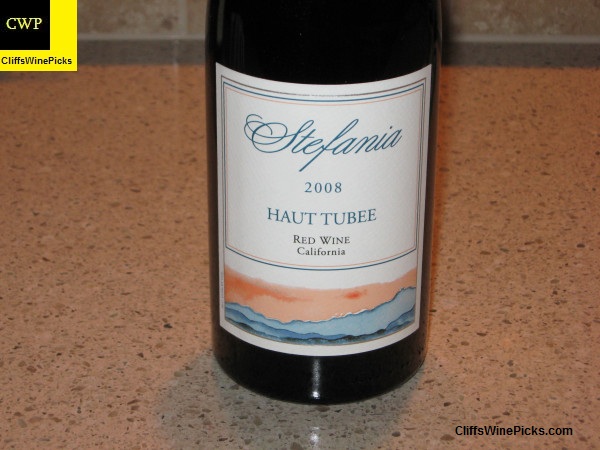
2008 Stefania Haut Tubee – $20.00


My comments

This is one of my favorite red blends coming out of California.  Every year the blend changes drastically based on the grapes available.  This vintage consists of 37% Cabernet Sauvignon, 36% Syrah, 15% Merlot, 10% Zinfandel, 2% Grenache, and trace amounts of Mourvedre, Cabernet Franc, Petit Verdot, and Pinot Gris.  As a point of reference, the fantastic 2007 vintage of the wine was 50% Syrah with Cabernet Sauvignon, Merlot, Zinfandel, Grenache, and Mourvedre making up the remaining 50%.


Winery history

Stefania was born in Minnesota.  Her father was an officer in the U.S. Army and she grew up in California, Nevada and Santiago, Chile.  She uses her background in accounting to run the day to day business of a small winery as well as handling wine making duties,vineyard construction management, purchasing, and of course vineyard work.  She loves to entertain friends at home or in the winery.  She painted the art work used on our labels and takes most of the photos used in our blogs and website.


Paul is a California native who has lived in San Jose for over 40 years.  He has worked at various high tech companies in Silicon Valley for 20 years specializing in Technical Support Management.  He handles wine making duties, planning, vineyard design, vineyard management, and acts as the official tour guide.  He loves to cook and host visitors to the winery or home.


Stefania and Paul were married in Jackson Square in the the French Quarter of New Orleans in 2003.  They return every year to celebrate their anniversary with friends in New Orleans.  They began  making wine in 2005 and were most interested in finding a business that would combine their love of food, wine and entertaining.  They are hands on in all parts of the grape growing and wine making process. One of their greatest joys has been the growing number of friends across the country who enjoy their wine.


Stefania Wine is supported by a small group of part time employees, family members and close friends who volunteer to help with labor intensive tasks.   We are lucky to have such great friends who are always willing to trade a day of hard work for a good meal and an ample supply of wine.


My Tasting Note

The wine is a deep, dark ruby color.  The very nice nose features blackberries, cedar, licorice, cherry, dried herbs, white pepper, plums, dark chocolate, violets, and a touch of earthiness.  This has medium body with solid, ripe tannins and very nice acidity.  Much brighter on the palate than I expected from the nose, with spicy cherries and plums leading the way with dried herbs and blackberries in the background.  The finish is full of juicy fruit and spice with a touch of earthiness.  A very tasty and unique wine for around $20.  (91 pts)


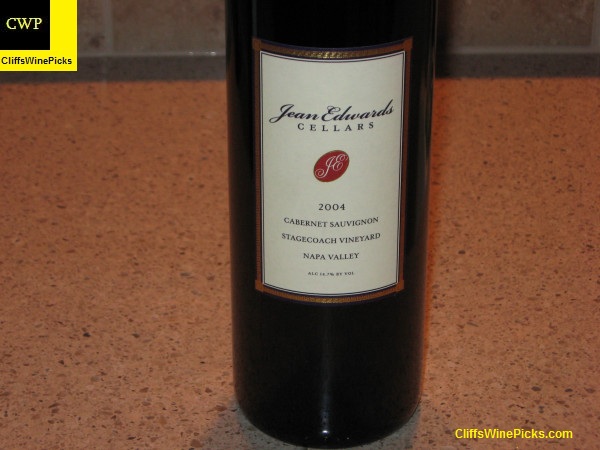
2004 Jean Edwards Cellars Cabernet Sauvignon Stagecoach Vineyard – $60.00


My comments

I guess you can call this a Social Media relationship.  I learned of Jean Edwards Cellars via Twitter.  I read their Tweets and started following them, luckily they followed me back.  Over the last couple of years we have exchanged jokes and Tweets about just about everything.  I was finally able to order a few bottles of their wine, and after giving a bottle a good 15 minutes to recover from the trip half way across the country, I popped the cork.  I am now a big fan and I spread their name to anyone who will listen to me.  I highly encourage you to check out their website and join their mailing list.  These are two very nice people making some of the best wine in the NapaValley.


Winery history

We are the owner/vintners of Jean Edwards Cellars – we share a passion for wine, a similar palate and a singular vision on the style of wines we produce.  We live by our motto that “you should only make wines you love to drink” and focus our production on artisan red wines that are full-bodied and classically styled.


Quality and heritage are important to us – our wines are reflective of their origins and are sourced some of the most prestigious vineyards (and vineyard blocks) throughout Napa Valley including Stagecoach Vineyard (on Pritchard Hill); vineyards on the valley floor in Rutherford, Oakville and Coombsville; and mountain vineyards on Howell and Spring Mountain.


Time really flies – we started producing commercial wines in 2004 but our dream of producing high quality NapaValley cabernet sauvignon wines started much earlier when we travelled to the valley in 1985.  During that trip, we developed a true appreciation for cabernet sauvignon wines and decided we would some day be a part of the business and produce a wine called Jean Edwards Cellars (our two middle names).  It was a goal worth waiting for and twenty plus years later we released our first wine in the Spring of 2006.


My Tasting Note

The wine is a fairly deep ruby to garnet color.  The sensuous nose features cassis, cedar, tobacco, dried herbs, smoke, well worn leather, black cherry, and just a touch of earthiness.  This has medium body with nice, ripe tannins and very good acidity.  The wine is rich and velvety on the palate with dried herb laced berries and cherries up front and nice savory notes and spicy oak adding considerable depth and complexity.  The long finish adds a touch of dark chocolate and earthiness to the fruit and dried herbs.  The wine is in a perfect drinking window with absolutely no rough edges or over powering elements, but it should hold for at least a few more years if not longer.  I’ll hold my remaining bottle for another couple years.  (94 pts)


Mailing Lists


It’s getting to be about time for the few wineries who have a Winter release to hit the inbox.  There usually aren’t that many, and other than the Loring release a week or two ago, most aren’t that exciting to me.


Wines bought or received this week


Direct from the winery

(2) 2010 McPrice Myers Syrah Larner Vineyard

(2) 2010 McPrice Myers Altas Vinas Alta Mesa Vineyard

(2) 2010 McPrice Myers Syrah Les Galets

(4) 2010 Myriad Cellars Cabernet Sauvignon

(2) 2010 Myriad Cellars Cabernet Sauvignon Beckstoffer Georges III


From a local store

(3) 2004 Clarendon Hills Grenache Old Vines Blewitt Springs


Winery sample for online Twitter tasting

2011 Robert Mondavi Winery Private Selection Coastal Crush Red


Remember to support your local wine store!


* * * * * * * * * * * * *


Notes – I use the “official” Cellar Tracker name for the wines.  I use Cellar Tracker to help manage and organize my cellar.  I highly recommend checking it out at www.cellartracker.com.  Loading you existing cellar is a lot less intimidating than it would first appear.  There is a good chance 99% of your wine is already in the system, so you generally only need to enter part of the wine’s name and the system will find it for you.


Prices noted are the prices I paid at the time of purchase.  I don’t shop around to find the best prices, but my local store is usually VERY competitive.  I generally get case discounts, and since I work there part time, I get a 5% discount.  Wines purchased direct from a winery do not include any shipping charges.  None of the prices include the sales tax.


All wines that were sent to me free of charge to sample will be noted and I will show suggested prices when available.


Cheers!


Nov 5, 2012 to Nov 8, 2012


2008 Owen Roe Abbot’s Table – $19.99


My comments

I’ve had this wine a couple of times and always found it to be pretty good, but not that special.  I thought it may just have needed a bit more cellar time for it to fully open and express itself to the fullest.  It has been close to a year since I last visited the wine, time to see if the additional cellar time will be rewarded.


This is a bend of 24% Zinfandel, 22% Sangiovese, 15% Cabernet Sauvignon, 12% Syrah, 10% Merlot, 7% Cabernet Franc, 6% Blaufrankish, and 4% Malbec.


Winery history

There’s really no Oregon wine quite like Owen Roe “the Abbot’s”.  A blend of five different red wine grapes, it’s a conversation starter.  Five distinctly different wines blended together make the scent and flavor like nothing else around.  It makes people curious and then wins them over.  For an intriguing, delicious wine made from unusual blends of varietals, look no further than Abbot’s Table.


“Abbot’s Table is a wine for all occasions and all people” says Owen Roe winemaker David O’Reilly.


My Tasting Note

The wine is a medium to dark ruby color.  The very interesting nose has cherries, minerals, earth, licorice, underbrush, blackberries, black pepper, vanilla, violets, and a faint herbal note.  This has medium body with soft tannins and very nice acidity.  The civilized and food friendly palate has a nice mix of fruit and savory elements with no rough edges or any one flavor dominating.  The finish is very flavorful but a touch short with the herbal note making an appearance.  A nice bottle of wine for a good week night dinner.  (88 pts)


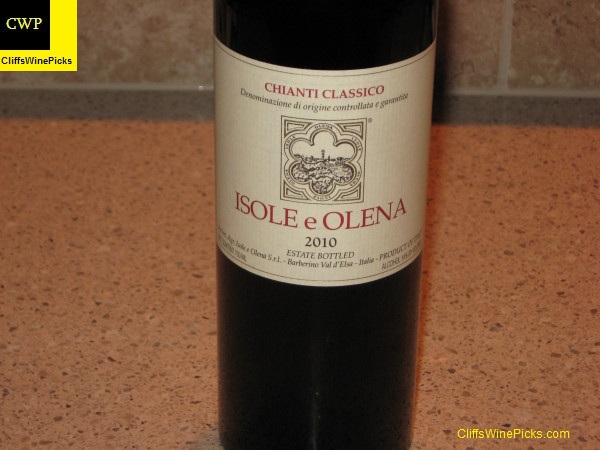
2010 Isole e Olena Chianti Classico – $18.59


My comments

It’s another cold, wet day in the Milwaukee area.  We decided it was a perfect day to defrost some of my wife’s meat sauce and cook up some pasta.  I grabbed a bottle of this from the local store a few weeks ago.  I wanted to try it so I could grab several bottles to last us over Winter if it was acceptable.


Winery history

Many of the wineries in the Chianti Region double as tourist attractions.  Not Paolo De Marchi’s Isole e Olena; when you turn right at the main gate and drive by the burnished steel fermentation tanks, you will come to a muddy square where you may find someone working on a wagon with an arc welder.


“We don’t have time for tourism,” says Paolo.  “It would distract us from our wines.”  His dedication is our gain; Isole e Olena’s wines are superb.  In addition to Chianti Classico, there is Cepparello, a pure Sangiovese of towering complexity and finesse, and a breathtaking Vinsanto.  The winery also produces a Cabernet Sauvignon, a Chardonnay, and L’Eremo, a Syrah.


Syrah is an ancient grape from the RhoneValley, which Paolo originally intended to use to add color and depth to his Chianti Classico (he feels that the Cabernet used in most Tuscan wineries can overwhelm Sangiovese).  However, he has since decided that the best way to improve Chianti is by careful selection of Sangiovese (Chianti’s principal grape), and is working to that end.  Meanwhile, L’Eremo placed fourth in a world-wide blind tasting of Syrah, after three wines from the RhoneValley.


Isole e Olena is also worth visiting if you like to talk wines.  Though Paolo has dropped out of the Consorzio del Marchio Storico (formerly Gallo Nero) for philosophical reasons, he firmly believes in the Chianti Classico region, and his opinions are the result of much thought.  For example, there is a movement to establish extra-high quality subzones within the Chianti Classico region.  “Since one of these zones includes Isole e Olena, it would be good for me,” he says with a grin.  “But so long as wineries can double their quality by hiring new enologists, I’m against it — it’s too soon.”


My Tasting Note

The wine is a nice, ruby red color.  The very nice and pleasing nose has plums, black cherries, baking spices, underbrush, dried herbs, and fresh flowers.  This is barely medium body with ripe tannins and very good acidity.  The wine is rich and lush on the palate with plenty of acidity holding everything together very nicely.  The finish has very nice length with red fruit, spice, and nice earthiness.  A very nice Chianti Classico, I need to pick up some more.  (91 pts)


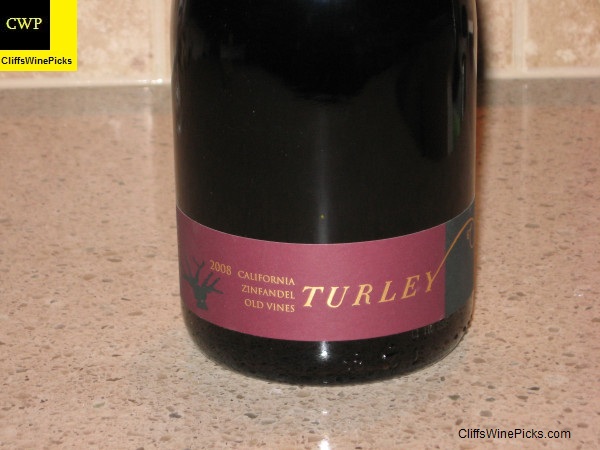
2008 Turley Zinfandel Old Vines – $25.00


My comments

I’ve always been a big fan of both the Juvenile and Old Vines Zinfandels from Turley.  Even though most people feel these are good to go upon release, I thing the Juvenile needs a year in the cellar and the Old Vines needs two years to lose some of the “baby fat” and to show their best.  These are two of the better priced zins on the market at $20 for the Juvenile and $25 for the Old Vines.


The Old Vines Zinfandel is made for “left over” juice from the single vineyard wines and from vineyards too small to warrant a single vineyard offering.


Winery history

In 1993, Turley Wine Cellars was founded by Larry Turley, brother of the well-known consulting winemaker Helen Turley.  Turley, had entered the wine business in 1981 as co-founder of the multi-varietal Frog’s Leap Winery, but soon realized that his interest lay in wines made from the Zinfandel grape.


Starting out with just one location in St. Helena, Turley Wine Cellars soon expanded to Templeton with the purchase of the historic Pesenti winery, where Zinfandel had been planted since 1923.


As of 2000, Turley Wine Cellars has had a two-year waiting list for new wine club customers.


In 2007, Turley Wine Cellars was producing approximately 14,000 cases a year of both single-vineyard and regional Zinfandel wines.


By 2011, Turley Wine Cellars is annually producing approximately 16,000 cases of award winning Zinfandel and Petite Sirah wines using multiple “small” vineyards located in Napa and Sonoma counties, and other Paso Robles locations.


My Tasting Note

The wine is a medium to dark ruby color.  The very nice nose has brambly berries, black pepper, vanilla, black cherry, minerals, smoked meat, and some dried herbs.  This is medium to full bodied with fairly solid, ripe tannins and very nice acidity.  The wine is a bit brighter on the palate with cherries and black raspberries, roasted herbs, and black pepper.  The wine has decent length on the finish.  This is a very nice zinfandel that is tasty but could use a bit more complexity.  Not as big and lush as some Turleys but still very enjoyable.  (90 pts)


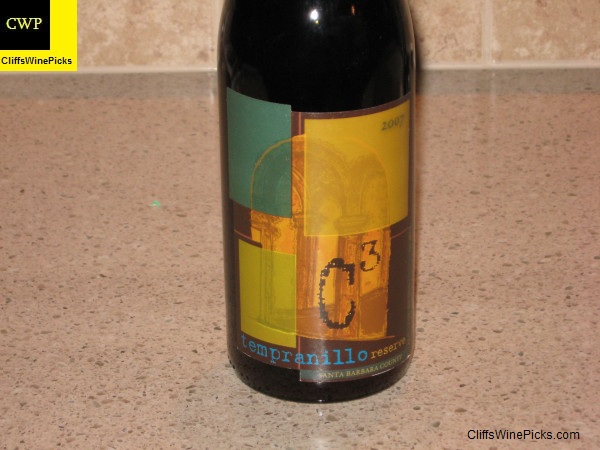
2007 Core Tempranillo C3 Reserve – $17.06


My comments

Since it is International Tempranillo Day, I guess I better open a Tempranillo.  This is a new one for me.  This was part of a set of Core wines that was offered on WineWoot a few weeks ago.  To me, Tempranillo is a grape the California wineries have been struggling with.  I’ve had a few Tempranillo based blends from Villa Creek that have been nice, but most have been disappointing.   Some have been too ripe and jammy, others have seemed under ripe and very tart, too tart.  It’s time to see if Dave Corey is having better success with this Spanish powerhouse grape.


Winery history

Dave Corey’s educational background includes a bachelor’s degree in Biology from San JoseStateUniversity and a master’s degree in Entomology and Plant Physiology from KansasStateUniversity, which was completed in 1995.


Prior to entering the wine industry in 1996, Dave worked in Salinas and the Central Valley in agricultural fields including cole crops, cotton, almonds, citrus, walnuts, kiwi, table grapes, apples and stone fruit.  His first position in the wine industry was as a Pest Control Advisor with Cambria Winery and Vineyards and later at Kendall-Jackson Vineyards of Santa Barbara County.


Dave left Kendall Jackson Vineyards in 1999 to begin Vital Vines, a viticultural company providing technical support for vineyard property owners, vineyard managers and winemaking personnel in the promotion of sustainable agriculture.  He has worked with clients that include Laetitia, Barnwood, Beckman, Melville, Stolpman, Gainey, Zaca Mesa, Sea Smoke, Le Bon Climat, Sine Qua Non, Rideau, Carhartt, Rusack, Westerly, Fiddlestix, Vogelzang, Andrew Murray, Evergreen, Arita Hills and Royal Oaks.


With a major commitment and a second mortgage, Dave gradually decreased his vineyard consulting work to focus on vineyard sourcing, winemaking duties and winery direct sales for CORE wine company which he started in 2001 with his wife, Becky.  Dave passionately continues working in the same capacity today in addition to several new wine projects with family members.  He can also be found pouring wine for customers at the CORE wine company tasting room in Old Orcutt, California.


My Tasting Note

The wine is a slightly hazy deep ruby color.  The wine has an exotic and exciting nose full of cherries, black raspberries, well worn leather, earthy underbrush, baking spices, licorice, and dried herbs.  This has a medium body with fairly solid, ripe tannins and very nice acidity.  On the palate the wine is loaded with tart cherries, raspberries, and baking spices up front with some earthiness and dried herbs in the background adding nice depth and complexity.   The finish is fairly long and full of juicy fruit and spice that slowly gives way to dried herbs and a touch of earthiness.  This is still very young and with the abundance of fruit, acidity, and tannins. some additional cellar time will be rewarded.  One of the better California Tempranillo wines I’ve had the pleasure to enjoy.  (93 pts)


Mailing Lists

I received the Winter offer from Villa Creek for a couple of their wines.  I do not receive an automatic shipment on these wines.  I am still deciding if I want to place an order.


Wines bought or received this week

Carlisle and Myriad are due in this week.


Remember to support your local wine store!


* * * * * * * * * * * * *


Notes – I use the “official” Cellar Tracker name for the wines.  I use Cellar Tracker to help manage and organize my cellar.  I highly recommend checking it out at www.cellartracker.com.  Loading you existing cellar is a lot less intimidating than it would first appear.  There is a good chance 99% of your wine is already in the system, so you generally only need to enter part of the wine’s name and the system will find it for you.


Prices noted are the prices I paid at the time of purchase.  I don’t shop around to find the best prices, but my local store is usually VERY competitive.  I generally get case discounts, and since I work there part time, I get a 5% discount.  Wines purchased direct from a winery do not include any shipping charges.  None of the prices include the sales tax.


All wines that were sent to me free of charge to sample will be noted and I will show suggested prices when available.


Cheers!


Dinner Party October 27, 2012


We had some of our best friends over for dinner on Saturday, October 27th.  Since they are into good wine as much as we are and it’s been quite a while since we’ve “broken bread” together, I decided to pull out a few special bottles.


They were calling for a cold day, so we decided to go with a good, nothing fancy, comfort food, style of dinner, with the wine playing the starring role.


I tried to pick wines that were all different but that would fit into the more laid back, easy living dinner we had planned.


For me, the hardest part of a dinner party is selecting the wines.  I select every one for a specific reason, even if the reason is that I just want to drink one.


On a sad note, after a lot of good food and wine, we ended up not opening the 2007 Saxum James Berry Vineyard.  My review of the Saxum is in my blog from Oct 26-28.


2010 Bedrock Wine Co. Cuvée Karatas – $28.00


My comments

I joined the Bedrock mailing list to get my hands on their red wines, but I am increasing impressed by their white.  I think the Bedrock white wines are some of the best being produced in California.  Across the board they have been outstanding.


My Tasting Note

The wine is a pale, golden yellow color.  The fresh and vibrant nose has melon, white peach, apples, slate, beeswax, flint jasmine, citrus zest, grapefruit, and some white pepper.  This is light to medium bodied with tart, citrusy acidity.  On the palate there is a load of spicy, mineral laden fruit with lemon zest and a healthy splash of grapefruit.  The wine has a long, lingering finish with nice tart grapefruit, lemon zest, and a touch of white pepper.  This is stunning today but will last in the cellar for at least a few years.  (93 pts)


2010 Loring Wine Company Pinot Noir “The Three” – $33.00


My comments

This was a special, limited production, bottling of the best of the best from Loring.  I was able to get a three pack of this wine.  It’s not for a Red Burgundy enthusiast, but a more over the top California version of Pinot Noir.


My Tasting Note

This is a deep, dark ruby color.  The very inviting nose is full of rich and smoky black cherries, earthy blackberries, minerals, baking spices, white pepper, underbrush, and vanilla.  This has medium to full body with fairly solid, ripe tannins and good acidity.  On the palate the wine is full of rich, spicy fruit with some subtle earthiness in the background.  The finish is fairly long with nice, ripe fruit and lingering spiciness.  This is nothing like a Red Burgundy, but that is not the winery’s goal so it succeeds, in my opinion.  (92 pts)


2006 Glaetzer Shiraz Amon-Ra Barossa Valley – $68.74


My comments

Year after year, this is one of the bench mark wines from Australia.


My Tasting Note

The wine is a deep, dark purple color, almost black.  The deep and alluring nose has blackberry, minerals, eucalyptus, baking spices, black cherries, earth, vanilla, licorice, and a nice floral note.  This is medium to full body with solid, ripe tannins and very good acidity.  A bit brighter on the palate than the nose lead me to expect, very ripe but not syrupy or off dry and the acidity and tannins hold everything together.  Very rich and velvety on the palate with layers of flavors that get revealed layer by layer.  The finish is extremely long with the fruit and savory notes seeming to constantly change highlighting a different sensation every couple of seconds.  On of the best wines I’ve ever had, absolutely stunning.  (96 pts)


2008 Myriad Cellars Cabernet Sauvignon Rutherford – $48.00


My comments

Mike Smith is one of the up and coming wine makers in California.  I’m glad I was able to get in on the ground flood of the operation.  The winery also produces a very good Syrah to go with their numerous cabernets.


My Tasting Note

The wine is a deep, dark ruby color.  On the outstanding nose the wine shows cassis, black cherry, Rutherford dust, minerals, licorice, baking spices, dried herbs, and dark chocolate.  This is fairly full bodied with solid tannins and very good acidity.  The wine has a long, lingering finish with spicy fruit and the dried herbs leading the way.  This is extremely young and will improve with a few more years in the cellar.  (93 pts)


Remember to support your local wine store!


* * * * * * * * * * * * *


Notes – I use the “official” Cellar Tracker name for the wines.  I use Cellar Tracker to help manage and organize my cellar.  I highly recommend checking it out at www.cellartracker.com.  Loading you existing cellar is a lot less intimidating than it would first appear.  There is a good chance 99% of your wine is already in the system, so you generally only need to enter part of the wine’s name and the system will find it for you.


Prices noted are the prices I paid at the time of purchase.  I don’t shop around to find the best prices, but my local store is usually VERY competitive.  I generally get case discounts, and since I work there part time, I get a 5% discount.  Wines purchased direct from a winery do not include any shipping charges.  None of the prices include the sales tax.


All wines that were sent to me free of charge to sample will be noted and I will show suggested prices when available.


Cheers!